
Joints That Stay Sealed Through Freeze Cycles
Concrete Joint Sealing in Eau Claire for slabs with exposed expansion gaps and control joints
Redman Sealcoating LLC performs concrete joint sealing in Eau Claire and the Chippewa Valley, focusing on the expansion gaps and control joints where water enters concrete systems. You need this service when joints show visible separation, cracking at seams, or when previous sealant has deteriorated and no longer fills the gap. Properties with driveways, walkways, or exterior slabs see moisture work its way into these vulnerable areas during rain and snowmelt, then expand when temperatures drop below freezing.
The service involves cleaning out existing joint material, removing debris and failed sealant, then applying a flexible seal designed to move with the concrete as it expands and contracts through Wisconsin's seasonal temperature swings. Joint sealing addresses the primary entry point for water that accelerates surface deterioration, limits the concrete's ability to drain properly, and contributes to cracking along seam lines over time.
Schedule a joint inspection to identify which gaps require sealing and assess the condition of surrounding concrete.
What Proper Joint Sealing Requires
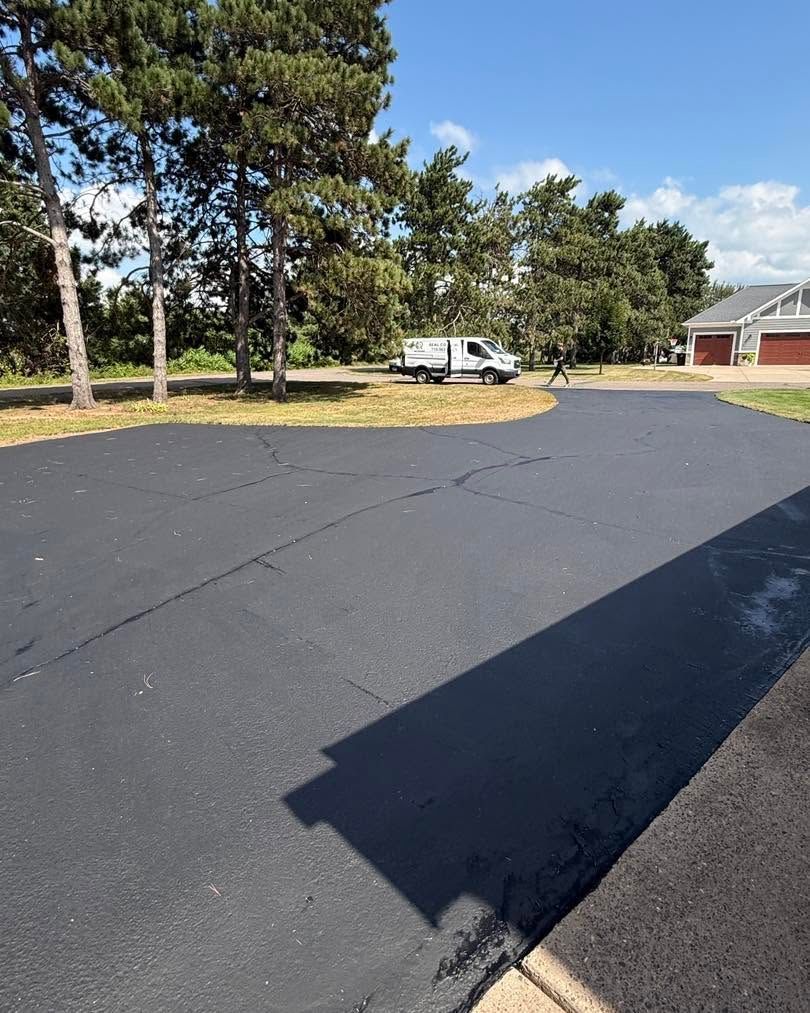
Joint preparation determines how well the seal bonds and how long it remains functional. The existing joint must be cleared of loose material, dirt, vegetation, and any old sealant that no longer adheres to the concrete edges. A flexible sealant is then applied to fill the joint without overfilling, allowing the material to move as the slabs shift slightly with ground movement and temperature changes.
After sealing, you'll notice that water no longer pools in the joints or runs into the gaps between slabs. Rain and snowmelt move across the surface instead of penetrating the seams, which reduces the freeze-thaw cycle damage that widens cracks and destabilizes slab edges. The sealed joints create a continuous barrier along control lines and expansion gaps where moisture previously entered the concrete system.
This service maintains surface integrity but does not repair structural cracks, sunken slabs, or underlying base failure. Joint sealing works as preventive maintenance for concrete that remains structurally sound but shows wear at the seams. If slabs have shifted or settled, those issues require separate evaluation before sealing provides any benefit.
What Property Owners Usually Ask
Concrete joints are designed to control where cracking occurs, but they also create entry points for moisture. Here's what customers in Eau Claire typically want to know before scheduling this service.
What happens to water that enters unsealed joints?
Water that penetrates joints saturates the base material beneath the concrete, then expands when it freezes. This freeze-thaw cycle pushes slabs apart, widens existing cracks, and creates voids under the surface that lead to settling and further joint separation over time.
How often do sealed joints need attention?
Sealant degrades from UV exposure, temperature extremes, and mechanical stress from traffic. Most joints require inspection every three to five years depending on exposure conditions, with resealing performed when the material shows cracking, pulling away from concrete edges, or no longer fills the gap completely.
When should joints be sealed?
Sealing works best when concrete temperatures remain above fifty degrees and no precipitation is expected for at least twenty-four hours after application. In the Chippewa Valley, late spring through early fall provides the most consistent conditions for sealant to cure properly and bond to the joint edges.
Why do some joints fail faster than others?
Joints in high-traffic areas or sections exposed to direct sunlight and standing water degrade more quickly. Driveways near downspouts, low spots where water collects, and seams that bear repeated vehicle weight show accelerated wear compared to walkways or slabs with minimal use.
What should I look for in joint condition?
Visible gaps, crumbling edges along seams, vegetation growing in joints, or water stains along control lines indicate that joints no longer provide effective moisture protection. Sealant that has shrunk, cracked, or pulled away from the concrete also signals the need for cleaning and resealing.
Redman Sealcoating LLC evaluates joint condition across your property's concrete surfaces to determine which areas require immediate attention and which remain functional. Request a concrete assessment to review joint integrity and discuss sealing options suited to your driveway or exterior slabs.